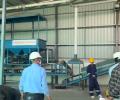
The trial incineration of 10 tonnes of waste from the Union Carbide plant in Bhopal, responsible for the 1984 gas tragedy, began on Friday afternoon in Pithampur, Madhya Pradesh. The process, ordered by the Madhya Pradesh High Court, is expected to take 72 hours to complete. The waste includes soil, reactor residues, pesticide residues, and other materials. The State Pollution Control Board says the chemicals in the waste have become "almost negligible" and there is no presence of methyl isocyanate gas. The incineration process is being monitored by the Pollution Control Board and broadcast live.
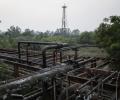
Incineration of entire 358 tonnes of toxic waste from the defunct Union Carbide factory finally concluded as contaminated soil and packaging material were burnt at a disposal plant in Madhya Pradesh's Pithampur on Thursday, over six months after the consignment was brought to the unit.

Victims' organisations have strongly opposed the proposed demolition of the defunct Union Carbide plant in Bhopal, which killed thousands and maimed lakhs, following the leakage of the deadly Methyl-Iso-Cyanate gas on December 2-3, 1984. "It is an attempt to weaken the criminal case pending in the sessions court as the defunct plant is important evidence in the case against Union Carbide," Gas Peedit Sangharsh Sahyog Samiti Convenor Sadhna Karnik told PTI.

The unloading of 337 tonnes of hazardous waste from the defunct Union Carbide factory in Bhopal began at an incineration unit in Pithampur, Madhya Pradesh. The exercise, which commenced amid protests from locals concerned about its impact on health and environment, is being carried out following safety regulations. The waste, comprising soil, reactor residues, pesticide remnants, and other materials, has been transported from Bhopal to Pithampur for disposal. The Madhya Pradesh Pollution Control Board has asserted that the chemical effects of certain substances in the waste have diminished. The local administration has launched an awareness campaign to address concerns regarding the disposal process.
Rediff.com's Prasanna Zore visits ground zero at the Union Carbide plant in Bhopal.
The court also ordered notices to be served to Union Carbide of the US and Eveready India Limited. The two firms have to file replies on March 17, the court said.

In a major blow to victims of the 1984 Bhopal gas tragedy, a United States court has ruled that the Union Carbide Corporation cannot be sued for the ongoing contamination from the chemical plant.

The first round of trial incineration of 10 tonnes of waste connected to the 1984 Bhopal Gas Tragedy has begun in Pithampur, Madhya Pradesh, amid tight security. The Supreme Court refused to intervene in the MP High Court's order directing the transfer and disposal of waste at a private company-operated plant in Pithampur. The trial incineration is being conducted in the presence of scientists from the central and state pollution control boards. Protesters have expressed apprehensions about harm to the human population and environment due to the disposal of this waste, but the state government has rejected these concerns, saying that solid arrangements are in place for safe disposal.

The waste disposal at the plant in Dhar district's Pithampur industrial area was undertaken following directives of the Madhya Pradesh high court.

The Madhya Pradesh high court in Jabalpur on Monday directed the state government to take steps within six weeks for disposal of Bhopal-based Union Carbide's 337 tonnes of hazardous waste as per safety protocols, while restraining the media from publishing any fake news on the same.
In a setback to the victims of the Bhopal gas tragedy, a United States court has held that neither Union Carbide nor its former chairman Warren Anderson were liable for environmental remediation or pollution-related claims emanating from the world's worst industrial accident.

A petition has been filed in the National Green Tribunal's Bhopal bench, seeking an assurance from the Madhya Pradesh government that the Union Carbide waste disposal in Pithampur won't harm people in nearby areas. The petition, filed by a Jabalpur-based social organisation, has urged the NGT to direct the state's chief secretary to declare on oath about the safety of people in Pithampur in Dhar district where the waste has been transported for disposal. The petition also seeks direction to the MP government to publish a specific report regarding the disposal of this waste to allay public concerns.
Nearly 900 tonnes of ash generated from the incineration of toxic waste linked to the Bhopal gas tragedy remains undispensed after the Madhya Pradesh High Court directed the state government to find an alternative disposal site.
Victims of the 1984 Bhopal gas tragedy have filed an appeal in a higher court in New York contesting a lower court's decision that Union Carbide Corporation cannot be sued for the ongoing contamination from the chemical plant.

The Indian government has approved two major manufacturing initiatives worth nearly Rs 1.9 lakh crore (USD 22 billion) to expand the country's semiconductor ecosystem and scale up mobile phone production, aiming to strengthen its position as a global electronics manufacturing hub.
About 1,000 alumni of the Indian Institutes of Technology (IITs) have sent a petition to the directors of the seven premier government-owned engineering institutes urging them to ban Dow Chemicals, which acquired the Union Carbide plant in 2001, from any partnership or role in the premier institutes of the country. This comes soon after the company was forced to cancel pre-placement talks, due in the last week of October, in IIT Madras and Bombay.

An Indian-origin Opposition Labour Party MP secured a debate in Westminster Hall of the UK parliament to call for justice for the victims of Bhopal gas tragedy, which will mark its 38th anniversary early next month.
The Congress jumped into action as it found former Prime Minister Rajiv Gandhi's name was being dragged into the ongoing controversy over Union Carbide chief Warren Anderson's disappearance from the country in December 1984 after a gas leak from the Union Carbide plant in Bhopal killed tens of thousands of people.
Victims of the Bhopal gas tragedy and their families held a rally outside the Union Carbide Factory to mark the 25th anniversary of the world's most deadly industrial disaster.
A case filed by Ramavtar Sahu for compensation, medical monitoring and clean-up of toxic waste near Union Carbide's plant in Bhopal as well as offsite water pollution is pending before the Court of Second Circuit of Appeals in USA.
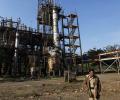
Just months before the deadly gas leak in Bhopal killed 15,000 people, journalist Rajkumar Keswani -- who passed into the ages on Friday, May 21, 2021 -- had warned that the 'city stood on the edge of a volcano'.
There's far too much to be said against Nuclear Liability Bill
New Scientist in a report, based on documents just released in the US, said "The owner of the chemical plant cut crucial corners in its design, and reduced investment to maintain control". \n\n
Talks are on with a German firm for disposal of toxic waste left at the Union Carbide plant in the aftermath of the 1984 disaster after Madhya Pradesh, Gujarat and Maharashtra declined to allow its destruction in their territory, Home Minister P Chidambaram said on Tuesday.
Victims of the 1984 Bhopal gas tragedy, described as one of the world's worst-ever industrial disasters, have filed a Right to Information petition with the prime minister's office in New Delhi.The RTI plea wants to know whether the Central government took into consideration the disaster of gas leak at the Union Carbide plant in Bhopal in 1984 while drafting the Civil Nuclear Liability Bill with the United States.

Just months before the deadly gas leak in Bhopal killed 15,000 people, journalist Rajkumar Keswani had warned that the 'city stood on the edge of a volcano'. He speaks of his 26-year battle to get justice for the victims.
Photographer Samar Jodha's latest installation gives you a 3D experience of the Bhopal gas tragedy

Meetings and protest marches in support of the demands of the victims marked the 29th anniversary of the Bhopal gas catastrophe here today.

Photojournalist Chandu Mhatre, one of the first to reach Bhopal after India's worst industrial disaster ravaged the city, remembers his worst seven days, in a conversation with Vaihayasi Pande Daniel/Rediff.com.
The trial court in the Bhopal gas tragedy case has held the owners of the Union Carbide pesticide plant, the Indian government and 'to some extent' the government of Madhya Pradesh responsible for the magnitude of the disaster. "The problem was worsened by the plant's location near a densely populated area, non-existent catastrophe plans and shortcomings in health care and socio-economic rehabilitation," said the judgment delivered by Chief Judicial Magistrate Mohan P Tiwari.

Even as the 30th anniversary of the Bhopal gas disaster is being observed in the city on Tuesday, its victims continue to be plagued with a number of problems that have not been resolved over the years.

At least 3,787 people were killed and more than five lakh were affected physically after a toxic gas leaked from the pesticide factory on the intervening night of December 2 and 3, 1984.

Sanjeeb Mukherjee, who was eight years old when the deadly gas leaked from Union Carbide's factory, gives his account of living in the city during that fateful period
A nation angered may spur the the Bhopal gas victims in their seemingly endless battle to get justce, writes Sheela Bhatt.
The survivors had demanded damages from the company and alleged that their water aquifiers were polluted due to the leak of hazardous chemicals from the UCC factory in Bhopal.
Indifferent parent, dithering states and a lethargic Centre have allowed Union Carbide's deadly waste to poison the soil and groundwater in Bhopal.

India has an appalling record on industrial safety.

Unconscious children being carried by parents in their arms, people laying on roads, health workers scrambling to attend to those affected by the styrene vapour leak and residents fleeing were some of the scenes that played out near Visakhapatnam on Thursday, bringing back grim memories of the 1984 Bhopal gas tragedy.

An NGO working for the Bhopal gas tragedy victims has alleged that there are no accurate figures available on the death toll of the world's worst industrial disaster even after 30 years and has also raised concern over the toxic waste lying in defunct Union Carbide plant situated near the densely populated old Bhopal area.
